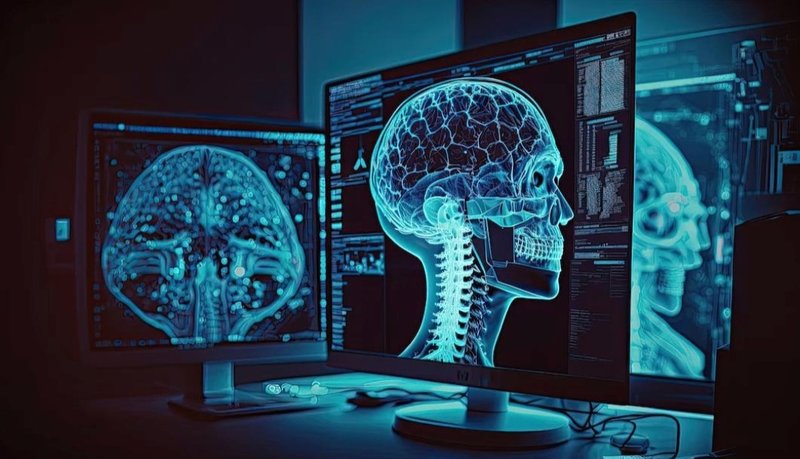
Artificial Intelligence (AI) is rapidly transforming the landscape of healthcare, particularly in the field of medical diagnosis. Traditionally, diagnosis has relied heavily on the clinical expertise and experience of healthcare professionals, supported by laboratory tests and imaging techniques. However, with the increasing complexity of diseases and the vast amount of medical data generated daily, conventional diagnostic approaches are being augmented by intelligent systems capable of analyzing and interpreting data with remarkable precision. AI, through its subsets such as machine learning and deep learning, is now playing an emerging and indispensable role in improving diagnostic accuracy, efficiency, and accessibility.
The integration of AI into diagnostic processes has enabled the analysis of large datasets, including electronic health records, medical imaging, genomic data, and real-time patient monitoring information. Unlike traditional systems, AI algorithms can identify subtle patterns and correlations that may not be easily detectable by human clinicians. For instance, in radiology, AI-powered tools are capable of detecting abnormalities such as tumors, fractures, and lesions in imaging scans with high sensitivity and specificity.
These systems not only assist radiologists but also reduce the chances of human error, thereby enhancing the reliability of diagnoses.
One of the most significant advantages of AI in diagnosis is its ability to provide early detection of diseases.
Early diagnosis is critical in conditions such as cancer, cardiovascular diseases, and neurological disorders, where timely intervention can significantly improve patient outcomes. AI models trained on large datasets can recognize early signs of disease progression and predict potential risks, allowing healthcare providers to take preventive measures. This predictive capability is particularly valuable in managing chronic diseases, where continuous monitoring and early intervention can prevent complications and reduce healthcare costs.
In addition to improving accuracy and early detection, AI is also enhancing diagnostic efficiency. Healthcare systems around the world often face challenges such as a shortage of skilled professionals and increasing patient loads.
AI-driven diagnostic tools can process and analyze data at a much faster rate than humans, enabling quicker decision-making and reducing waiting times for patients. This is especially beneficial in emergency settings, where rapid diagnosis can be life-saving. Furthermore, AI systems can operate continuously without fatigue, ensuring consistent performance and reducing variability in diagnostic outcomes.
Another important aspect of AI in diagnosis is its role in personalized medicine. By analyzing individual patient data, including genetic information, lifestyle factors, and medical history, AI can assist in tailoring diagnostic and treatment strategies to the specific needs of each patient. This personalized approach not only improves the effectiveness of treatment but also minimizes adverse effects. For example, AI can help identify which patients are more likely to respond to certain therapies, thereby optimizing clinical decision-making and improving patient care.
Despite its numerous advantages, the implementation of AI in medical diagnosis also presents several challenges. One of the primary concerns is the quality and reliability of data used to train AI models. Inaccurate or biased data can lead to incorrect predictions and potentially harmful outcomes. Additionally, there are ethical and legal considerations related to patient privacy, data security, and accountability in case of diagnostic errors. The integration of AI into healthcare systems also requires significant investment in infrastructure, training, and regulatory frameworks to ensure safe and effective use.
Moreover, while AI can assist in diagnosis, it cannot replace the human element in healthcare. Clinical judgment, empathy, and patient interaction remain essential components of medical practice. AI should be viewed as a supportive tool that enhances the capabilities of healthcare professionals rather than replacing them.
The collaboration between AI systems and clinicians can lead to more informed decision-making and improved patient outcomes.
The future of AI in diagnosis is promising, with ongoing advancements in technology and increasing adoption across healthcare systems. Innovations such as wearable devices, remote monitoring, and telemedicine are further expanding the role of AI in providing accessible and efficient diagnostic services.
As research continues, AI is expected to become more accurate, reliable, and integrated into routine clinical practice. This evolution will not only improve the quality of healthcare but also make it more accessible to populations in remote and underserved areas.
In conclusion, AI is revolutionizing the field of medical diagnosis by enhancing accuracy, enabling early detection, improving efficiency, and supporting personalized medicine. While challenges remain, the potential benefits of AI in transforming healthcare are immense. By addressing the existing limitations and ensuring ethical implementation, AI can play a pivotal role in shaping the future of diagnosis and ultimately improving global health outcomes.
References
- Topol, E. (2019). Deep Medicine: How Artificial Intelligence Can Make Healthcare Human Again. Basic Books.
- Jiang, F., Jiang, Y., Zhi, H., et al. (2017). Artificial intelligence in healthcare: past, present and future. Stroke and Vascular Neurology, 2(4), 230–243.
- Esteva, A., Kuprel, B., Novoa, R. A., et al. (2017). Dermatologist-level classification of skin cancer with deep neural networks. Nature, 542(7639), 115–118.
- Rajkomar, A., Dean, J., & Kohane, I. (2019). Machine learning in medicine. New England Journal of Medicine, 380, 1347–1358.
- WHO (2021). Ethics and Governance of Artificial Intelligence for Health. World Health Organization.
- Davenport, T., & Kalakota, R. (2019). The potential for artificial intelligence in healthcare. Future Healthcare Journal, 6(2), 94–98.