Understanding the Meaning of Disability
The word disability has often been misunderstood. Many people still look at it through a narrow lens, as if a person’s worth can be measured by eyesight, mobility, hearing, or physical movement. That old habit needs to be retired. A disability may describe a condition, but it does not describe a human soul. It does not measure courage, intelligence, discipline, humor, leadership, or grit. Those qualities live elsewhere—in character, in willpower, in the daily choice to rise.
Society has a strange habit of noticing what is missing while ignoring what is present. A person using a wheelchair enters a room, and some only see the chair. They miss the degrees earned, the battles fought, the jokes ready to be told, the skills sharpened through years of effort. Labels can become lazy shortcuts. They flatten complex human beings into one word, and that word is rarely enough.
In India, terms like viklang were once common, focusing on impairment. Later, the phrase divyang became popular, emphasizing special ability. Language matters because words shape thought. Still, no term works if respect is absent. Real dignity comes when we stop reducing people to categories and begin seeing them as complete individuals with talent, flaws, ambition, and agency.
The wiser view is simple: disability is not inability. It is a condition interacting with a world that is often poorly designed. Change the environment, improve access, remove prejudice, and many barriers shrink. Sometimes the wall is not in the body—it is in the staircase, the hiring process, the classroom, or the mindset of others.
The Paralympics Explained
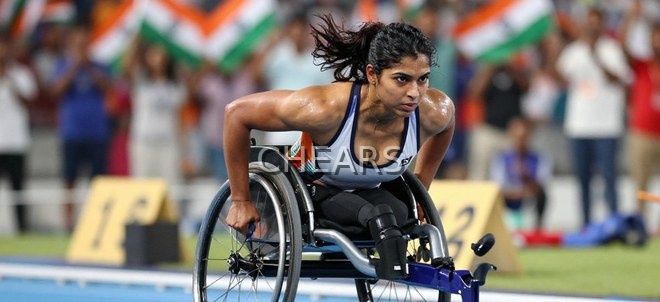
The Paralympics are often described as a parallel version of the Olympics, but that phrase feels too small. This is one of the greatest sporting stages on earth, where elite athletes compete at the highest level under classification systems designed for fairness. These athletes do not participate for sympathy. They compete for medals, records, pride, and national honor. That distinction matters.
What makes the Paralympics remarkable is the fusion of excellence and adaptation. Every sprint, throw, swim, lift, and rally reveals years of training, technical discipline, and relentless sacrifice. You do not arrive at the Paralympics through motivation quotes. You arrive through brutal mornings, injuries, repetition, coaching, nutrition, and stubborn persistence. The romance is in the result; the reality is in the grind.
For viewers, the Paralympics can be transformative because they expose how narrow our definitions of strength have been. A runner with a blade prosthetic exploding from the blocks, a visually impaired athlete trusting rhythm and guidance, an archer steadying breath under pressure—these moments challenge assumptions. They ask a quiet question: who decided strength had only one shape?
The Games also carry social power. They increase visibility, inspire younger generations with disabilities, and pressure governments to improve infrastructure and support systems. Sport alone cannot solve inequality, but it can open doors that politics often leaves shut. A medal can become a mirror in which a nation sees both its pride and its unfinished work.
India’s Rising Paralympic Journey
India’s recent Paralympic rise is one of the most encouraging stories in modern sport. At the Paris Paralympics 2024, India won a record 29 medals, including 7 gold, 9 silver, and 13 bronze, finishing 18th overall. That surpassed the previous best of 19 medals at Tokyo 2020. The numbers are impressive, but numbers alone do not capture the shift.
This success signals a maturing ecosystem. Better coaching, wider awareness, improved scouting, stronger athlete support, and growing public attention are beginning to bear fruit. India has always had talent. The challenge was structure. Raw potential without systems is like rain falling on stone—abundant, yet wasted. Systems turn talent into harvest.
There is also a deeper emotional meaning here. For years, Paralympic victories did not receive the same national celebration as Olympic achievements. That imbalance said more about society than sport. When a para-athlete wins on the world stage, the medal is not “lesser.” If anything, it often represents an even steeper climb through social neglect, financial hurdles, and inaccessible environments.
The next chapter for India should not be occasional applause after medals. It should be sustained investment before medals. Build training centers, fund grassroots programs, ensure accessible transport, create scholarships, and feature para-sport consistently in media. If Paris was a milestone, the road ahead could be far grander.
Inspiring Personalities Who Changed the Narrative
Some lives become lanterns for the rest of us. Stephen Hawking is one such figure. Diagnosed with motor neuron disease, he gradually lost physical mobility, yet reshaped modern thinking about the universe. His body narrowed in function, but his mind roamed galaxies. That contrast is unforgettable. It reminds us that the human intellect does not ask permission from muscle.
Hawking once expressed that though he could not move freely or speak naturally, he remained free in his mind. That idea cuts through vanity. We spend so much time worshipping external ability that we sometimes forget the astonishing freedom of thought, imagination, and inquiry. Many physically able people live mentally imprisoned lives. Hawking did the opposite.
India’s Deepa Malik offers another powerful example. As the first Indian woman to win a Paralympic medal, she became more than an athlete—she became a statement. Her often-quoted idea that disability can exist in thoughts, not just the body, deserves to be carved into public memory. Limitation begins where belief ends.
These figures matter because they replace pity with respect. They alter the emotional script. Instead of saying, “How unfortunate,” we begin saying, “How extraordinary.” That shift changes classrooms, workplaces, families, and policy. Heroes do not just win medals or write equations. They widen what others think is possible.
Mental Strength vs Physical Limitation
Many battles are invisible. A damaged ligament can be scanned. A missing limb can be seen. But fear, shame, hesitation, self-doubt, and exhaustion often hide behind smiles. This is why mental strength matters so deeply. The fiercest contest may not be against another athlete—it may be against the voice that whispers, “Enough. Stop here.”
Persons with disabilities often face a double burden: the practical challenge of a condition and the social burden of low expectations. Sometimes strangers decide their ceiling before they even begin. Imagine carrying that weight into every interview, classroom, or stadium. Then imagine still winning. That is why resilience in this context deserves special respect.
Confidence is not loud arrogance. It is the calm belief that effort has meaning. Para-athletes embody this repeatedly. They train in systems that are still catching up, compete under pressure, and represent countries where awareness may be uneven. Yet they show up. Again and again. There is something ancient and noble in that discipline.
We should also be honest: motivation alone is not enough. People need therapy, community, coaching, accessible tools, income support, and fair chances. Courage is real, but support matters too. Romanticizing struggle while denying resources is hypocrisy dressed as praise.
Challenges Faced by Persons with Disabilities
Even today, many persons with disabilities face obstacles that have nothing to do with their condition and everything to do with public neglect. Buildings without ramps, broken footpaths, inaccessible toilets, poor signage, and transport systems that ignore mobility needs create daily friction. A city can quietly tell people whether they belong.
Education remains another fault line. Schools may welcome students in principle but fail them in practice. Missing assistive technology, untrained staff, rigid teaching methods, and casual bullying can push talented students aside. A child repeatedly excluded learns a painful lesson early: the world was designed with someone else in mind.
Employment follows a similar pattern. Many employers still judge disability before skill. They worry about accommodations without understanding how manageable many adjustments are. The result is lost talent. Businesses complain about finding committed workers while overlooking candidates who have already demonstrated resilience, adaptability, and determination in life itself.
Then there is the social gaze—sometimes pitying, sometimes patronizing, sometimes overly heroic. People with disabilities are not saints, symbols, or lessons for others. They are citizens. They deserve ordinary respect: privacy, fairness, friendship, opportunity, and room to be imperfect like everyone else.
What Society Must Do Next
Celebration matters, but celebration after victory is not enough. Nations love podium moments because they are easy to applaud. The harder task is building conditions where more people can reach that podium—or simply live with dignity without ever wanting a medal. Inclusion must move from slogan to structure.
Governments should strengthen accessibility laws and enforce them seriously. Schools should integrate inclusive design from the start, not as an afterthought. Sports federations should identify para-talent early and fund long-term development. Media houses should cover para-sport regularly rather than briefly every four years. Familiarity breeds respect.
Families also play a decisive role. A supportive home can become a launchpad. An overprotective or ashamed home can become a cage. Parents and relatives must learn the art of backing dreams without smothering independence. That balance is not always easy, but it changes lives.
And each of us can do something smaller, immediate, human: stop staring, stop assuming, ask respectfully, make space, hire fairly, speak normally, listen carefully. Grand change often begins in ordinary manners.
Conclusion
The Paralympics do more than award medals. They challenge old myths about power, weakness, success, and human value. Disability does not erase talent. It does not cancel ambition. It does not silence greatness unless society helps silence it.
India’s record performance in Paris should be celebrated not as a surprising exception, but as evidence of what happens when talent receives a chance. The deeper lesson reaches beyond stadiums: real strength is not always visible. Sometimes it arrives on wheels, with prosthetics, with scars, with silence, with a stubborn smile.
A body may face limits. The mind, spirit, and will often redraw them.
Are we ready to see people not by what is absent, but by what is alive within them?