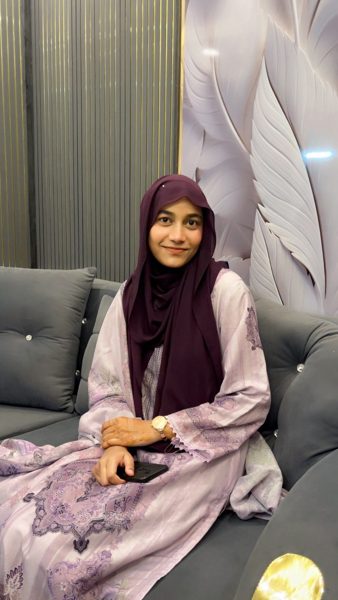
Asiya was just twelve years old when she discovered what she wanted to become.
It happened on an ordinary afternoon while she was playing with her siblings. She had always been curious about people, their behaviour, and the reasons behind their reactions. She often found herself wondering why one person became angry over something another person easily ignored, or why someone who seemed happy could still be hiding sadness.
She did not know there was a subject dedicated to understanding these questions. She only knew that she wanted to understand people better.
One day, while visiting a friend's house, Asiya noticed her friend's elder sister studying. Curious, she asked, “What are you studying?”
“Psychology,” her friend's sister replied.
Asiya looked at her with surprise. “What is psychology?”
Her friend's sister explained that psychology was the study of the human mind and behaviour, including how people think, feel, and act.
Asiya listened carefully. Something about that explanation stayed with her long after she left the house. For days, she kept thinking about it. What if she could turn her curiosity into a career? What if she could understand people, support them, and help them navigate the challenges they faced?
That afternoon, a twelve-year-old girl found a name for her dream.
She wanted to become a psychologist.
The Years We Spend Building Our Dreams
From that day onwards, Asiya approached her studies with a clear purpose. She worked hard, remained consistent, and tried to perform her best in every class. She often imagined herself sitting in a psychologist's office one day, listening to people and helping them understand their thoughts and feelings.
Her efforts paid off. She regularly secured the top position in her class, and every achievement brought her one step closer to the future she had imagined.
Eventually, she entered college and chose psychology as her major. For Asiya, this was more than an academic decision. It was the beginning of the career she had dreamed about for years.
But life does not always follow the plans we make for it.
As college became more demanding, assignments, examinations, practical work, and expectations began to fill her days. She wanted to excel, build her knowledge, and prepare herself for a successful career. Slowly, however, she started paying less attention to herself.
She slept late to complete her assignments, skipped meals when deadlines approached, and ignored the constant tiredness she felt. Whenever someone suggested that she take a break, she told herself, “Just a little more work. I can rest later.”
After all, she had worked too hard to give up now.
What Asiya did not realise was that while she was preparing herself to understand other people's struggles, she was overlooking the signals her own body was giving her.
When Health and Career Begin to Intersect
At first, Asiya's exhaustion seemed manageable. But gradually, concentrating on lectures became difficult. She struggled to maintain her usual routine and felt drained even after completing tasks she once enjoyed.
She began to understand something she had never considered seriously before: pursuing a career requires more than academic performance, determination, and qualifications.
It also requires taking care of the person working towards that career.
For students and young professionals, the pressure to succeed can make health seem like a secondary priority. There are examinations to prepare for, internships to secure, skills to develop, and career opportunities to pursue. In the middle of these responsibilities, sleep, nutrition, physical activity, and emotional well-being can easily be neglected.
However, persistent stress, inadequate sleep, and poor eating habits can affect concentration, mood, and everyday functioning. Mental and physical health are closely connected, and neither should be ignored in the pursuit of professional success.
Asiya had always imagined what her future would look like once she became a psychologist. She had spent years preparing for that future, but she had forgotten that her present health was equally important.
Her dream had not changed. She simply needed to find a healthier way to pursue it.
Your Career Needs You, Too
Asiya's story reflects a challenge many students experience. We spend years preparing for examinations, choosing degrees, developing skills, and working towards professional goals. We learn how to meet expectations, overcome competition, and keep moving forward.
But how often do we learn to recognise when we need to slow down?
Education is not only about acquiring knowledge or earning qualifications. It is also about developing the awareness and skills needed to build a balanced, sustainable life. Understanding health, recognising signs of stress, and knowing when to seek support are valuable lessons that can help students throughout their academic and professional journeys.
When students have access to reliable health information, they can make more informed decisions about their well-being while continuing to work towards their ambitions. A healthier approach to education and career development recognises that achievement and self-care should support each other, rather than compete.
Do Not Lose Yourself While Finding Your Future
Imagine Asiya at twelve again, excitedly telling someone that she wants to become a psychologist. She had a dream, a reason to work hard, and the determination to keep going.
She deserved to pursue that dream. But she also deserved to feel well while pursuing it.
The same is true for every student who dreams of becoming a doctor, teacher, artist, entrepreneur, psychologist, or anything else they aspire to be.
Your career is an important part of your life, but it is not your entire life. Your marks do not define your worth, and your productivity should not determine whether you deserve rest.
Work towards your goals. Take your education seriously. Build your skills and prepare for the opportunities ahead. But remember to eat well, sleep enough, make time for movement, and pay attention to your physical and mental health.
And if something does not feel right, do not hesitate to seek appropriate help.
Because building a career is not just about deciding who you want to become. It is also about taking care of yourself along the way.
Your dream matters. Your future matters.
And so do you.