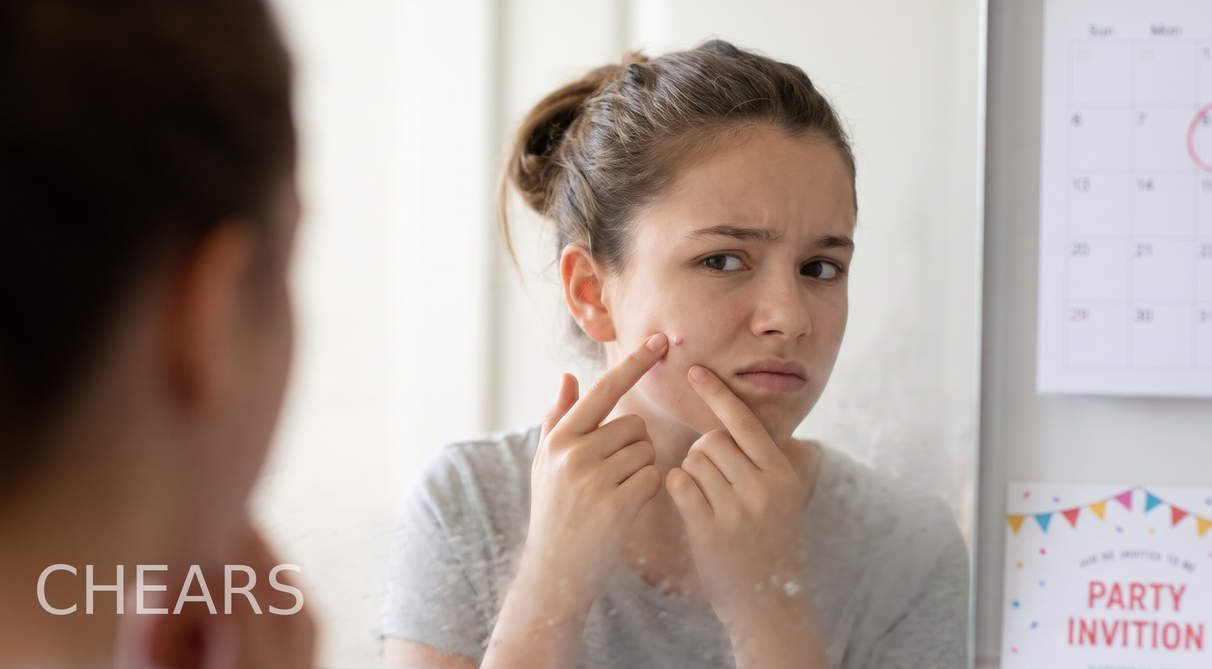
You wake up, look in the mirror, and there it is!.
Another pimple.
Maybe it is on your forehead. Maybe on your cheeks. Maybe it showed up right before a school event, a college presentation, a birthday, or the day you finally decided to take a good photo.
Acne, the medical condition that causes pimples, is common and a normal part of growing up—especially during the teenage years. In fact, around 85% of people experience acne during adolescence.
It is caused by changes in the hair follicles and oil glands of the skin. When the glands produce too much oil, dead skin cells can build up and block the follicles. This can create an environment where acne develops, leading to blackheads, whiteheads, pimples, and sometimes deeper, painful lumps.
The good news?
Acne is common, manageable, and not a sign that you are doing something wrong.
So, What Actually Causes Acne?
To understand acne, imagine what is happening underneath the skin.
Your skin contains tiny hair follicles connected to oil glands. These glands produce sebum, an oily substance that helps keep your skin from becoming too dry.
During puberty, hormonal changes—particularly increases in hormones called androgens—can make these glands more active.
More active oil glands mean more sebum.
At the same time, dead skin cells can build up and block the hair follicles. When a follicle becomes clogged, different types of acne can develop.
And that is where the familiar spots begin.
Whiteheads occur when a clogged pore stays closed.
Blackheads occur when the clogged pore remains open and the material inside reacts with air, producing the dark appearance. Contrary to a common myth, the dark colour is not simply dirt.
Pimples can develop when the blocked follicle becomes inflamed.
Some acne can go deeper into the skin and become painful nodules or cysts.
So acne isn't simply a matter of “dirty skin.”
There is a lot more happening beneath the surface.
Why Do Teenagers Get It So Often?
Puberty is one of the biggest reasons.
As the body develops, hormone levels change. These hormonal changes can stimulate the oil glands and contribute to clogged pores.
Genetics can also matter. If your parents experienced significant acne, you may be more likely to experience it too.
Other factors can sometimes contribute to breakouts or make existing acne worse, including certain medications, oily or pore-clogging products, friction or pressure on the skin, and stress.
For some people, certain dietary patterns may also be associated with acne, although diet is only one possible factor and does not explain every breakout.
In other words, there isn't always one single cause.
No, Having Acne Doesn't Mean You Have Poor Hygiene
This is one of the most important myths to clear up.
You can have acne even if you wash your face regularly.
In fact, scrubbing your skin aggressively or washing it repeatedly can cause irritation and make your skin feel worse.
Your skin doesn't need punishment.
It needs consistent care.
A gentle cleanser can help remove excess oil, sweat, and everyday buildup without unnecessarily irritating the skin.
So, What Can You Actually Do About Acne?
This is where things become practical.
You don't need a bathroom shelf filled with twenty products.
Start with the basics.
1. Cleanse Gently
Wash your face gently, generally twice a day and after heavy sweating.
Use your fingertips and avoid harsh scrubbing.
Your face should feel clean—not painfully dry or tight.
2. Moisturise Your Skin
“But my skin is already oily. Why would I need moisturiser?”
Because oily skin can still become irritated and dehydrated.
Choose a moisturiser labelled non-comedogenic, meaning it is designed to be less likely to clog pores.
A moisturiser can also be particularly useful if acne treatments make your skin dry.
3. Don't Skip Sunscreen
If you are using acne treatments, your skin may become more sensitive or irritated.
A broad-spectrum sunscreen can help protect your skin from UV radiation.
Choose one that feels comfortable and is suitable for acne-prone skin.
4. Consider Proven Acne Ingredients
Some ingredients are commonly used to manage acne.
Salicylic acid can help remove dead skin cells and keep pores from becoming clogged.
Benzoyl peroxide can help reduce acne-causing bacteria and inflammation.
Other treatments, including topical retinoids, may also be recommended depending on the type and severity of acne.
But here's the important part:
More is not better.
Using several strong products at once can irritate your skin. Follow product instructions, introduce treatments carefully, and speak with a healthcare professional if you're unsure what is appropriate for you.
What About Picking, Popping and Scratching?
Just don't.
We know. Easier said than done.
You see the pimple.
You touch it.
You squeeze it.
And suddenly you've turned a small spot into an irritated patch of skin.
Picking and squeezing can increase inf
lammation and raise the risk of marks and scars.
If you want clearer skin, sometimes the best thing you can do is keep your hands away from it.
What About Toothpaste, Lemon and Other Home Remedies?
This is where the internet can get confusing.
You may have seen someone recommend toothpaste for pimples or lemon juice for acne marks.
But not everything that goes viral belongs on your face.
Some household ingredients can irritate the skin, cause dryness, or damage the skin barrier.
Before trying a DIY treatment, ask yourself:
“Is this advice coming from a reliable health source, or did I just see it in a 20-second video?”
When it comes to your health, evidence matters.
Can Stress Cause Acne?
Stress isn't necessarily the original cause of acne, but it can sometimes make existing acne worse.
And teenagers have plenty of reasons to feel stressed—exams, deadlines, relationships, social pressure, family expectations, and simply trying to figure life out.
That doesn't mean every breakout is “because you're stressed.”
It simply means that looking after your overall wellbeing matters too.
Getting enough sleep, staying physically active, eating a balanced diet, and finding healthy ways to manage stress can support your general health.
What About Food?
This is one of the most common questions.
“Does chocolate cause acne?”
There isn't a simple answer.
Acne isn't caused by one particular food for everyone. Research suggests that certain dietary patterns, including diets with a high glycaemic load, may be associated with acne in some people.
But that doesn't mean you need to blame yourself for eating a chocolate bar.
Instead of following extreme food restrictions based on internet advice, focus on a balanced diet and pay attention to patterns that seem to affect your own skin.
If you're concerned about your diet or acne, a healthcare professional or registered dietitian can provide appropriate guidance.
When Should You See a Dermatologist?
Sometimes skincare isn't enough.
Consider seeking professional help if your acne:
- Is painful or deep
- Is severe or spreading
- Keeps returning despite consistent care
- Is leaving scars or persistent marks
- Is affecting your confidence or everyday life
- Is making you feel distressed or withdrawn
A dermatologist can determine what type of acne you have and recommend treatment according to its severity.
Treatment may involve topical medicines, prescription treatments, or other options depending on the individual.
And you don't have to wait until your acne becomes severe before asking for help.
One Last Thing: Your Skin Is Not Your Identity
Acne can feel like a much bigger problem than a few spots.
You may avoid photographs.
You may stop looking in the mirror.
You may wonder whether people are noticing your skin before they notice you.
But remember what acne actually is:
A common skin condition. Not a personality trait. Not a measure of beauty. Not a measure of cleanliness. And certainly not a measure of your worth.
Take care of your skin. Get your information from trustworthy sources. Be patient with treatment. Don't pick at your skin. And speak to a healthcare professional when you need help.
Because the goal isn't to wake up tomorrow with “perfect skin.”
The goal is to understand your skin well enough to take care of it.
Your acne may be part of your teenage years. It doesn't have to define them.