
Introduction
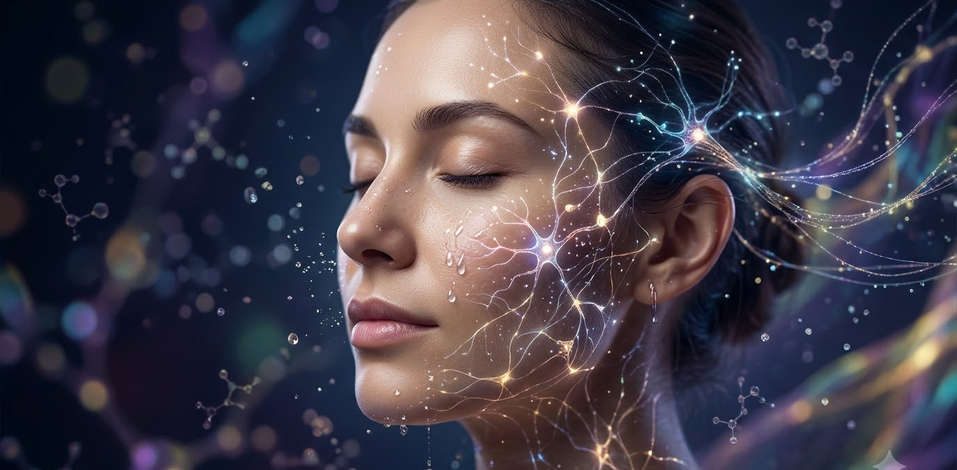
The beauty and skincare industry has evolved far beyond traditional creams and lotions. Modern consumers are increasingly seeking products that not only improve physical appearance but also enhance emotional well-being. This growing interest has led to the emergence of neurocosmetics, an innovative field that combines neuroscience and cosmetic science to create products that influence both the skin and the mind.
Neurocosmetics are based on the understanding that the skin and nervous system are closely connected. Both originate from the same embryonic tissue known as the ectoderm. As a result, the skin can communicate with the brain through various neurotransmitters, hormones, and sensory receptors. Stress, emotions, and mental health can significantly affect skin conditions, while skincare products can potentially influence mood, comfort, and emotional responses.
As consumers become more aware of holistic wellness, neurocosmetics are gaining attention as a promising frontier in skincare. This article explores the concept of neurocosmetics, their mechanisms of action, applications, benefits, challenges, and future potential in the rapidly growing skincare industry.
Understanding Neurocosmetics
Neurocosmetics refer to cosmetic products designed to interact with the skin's nervous system and influence the communication between the skin and the brain. Unlike conventional cosmetics that primarily focus on cleansing, moisturizing, or protecting the skin, neurocosmetics aim to improve both skin health and emotional well-being.
The skin contains numerous nerve endings and receptors capable of responding to external stimuli. These receptors can detect temperature, touch, pain, and chemical signals. Neurocosmetic ingredients are developed to target these receptors and stimulate beneficial responses such as relaxation, comfort, reduced sensitivity, and improved skin appearance.
The concept is based on the "skin-brain axis," a communication network that links the skin and the nervous system. When an individual experiences stress, anxiety, or emotional imbalance, the skin often responds with inflammation, acne, redness, dryness, or premature aging. Neurocosmetics attempt to address these issues by modulating the biological signals involved in this process.
Mechanism of Action
Neurocosmetics work through several mechanisms that influence the skin's neurological and biochemical pathways.
1. Regulation of Neurotransmitters
Certain ingredients can stimulate the production or activity of neurotransmitters such as serotonin, dopamine, and endorphins. These molecules are associated with feelings of happiness, relaxation, and comfort. By promoting their activity, neurocosmetics may contribute to an improved sensory experience and enhanced emotional well-being.
2. Reduction of Stress-Induced Skin Damage
Chronic stress increases the release of cortisol, commonly known as the stress hormone. Elevated cortisol levels can weaken the skin barrier, increase inflammation, and accelerate skin aging. Neurocosmetic formulations may contain ingredients that help reduce the effects of cortisol on the skin.
3. Modulation of Sensory Receptors
The skin contains receptors that respond to touch, temperature, and chemical stimuli. Neurocosmetic ingredients can interact with these receptors to reduce discomfort, itching, irritation, and sensitivity, making the skin feel calmer and healthier.
4. Enhancement of Skin Barrier Function
A healthy skin barrier is essential for maintaining hydration and protection against environmental stressors. Neurocosmetics often include ingredients that strengthen the skin barrier while simultaneously reducing stress-related damage.
Key Ingredients Used in Neurocosmetics
Several bioactive compounds are commonly incorporated into neurocosmetic products:
- Neuroactive Peptides
- These peptides can influence communication between nerve cells and skin cells, helping to reduce signs of stress and aging.
- Adaptogens
- Natural ingredients such as ashwagandha, ginseng, and rhodiola help the body adapt to stress and may provide protective effects for the skin.
- Cannabidiol (CBD)
- CBD has gained popularity for its anti-inflammatory and soothing properties. It may help calm irritated skin and reduce discomfort.
- Botanical Extracts
- Plant-derived ingredients such as lavender, chamomile, and green tea can provide calming effects while supporting skin health.
- Probiotics and Postbiotics
- These ingredients help maintain a balanced skin microbiome, which may positively influence both skin condition and neuroimmune responses.
Applications of Neurocosmetics
Neurocosmetics have a wide range of applications in modern skincare.
- Anti-Aging Products
- Stress contributes significantly to premature skin aging. Neurocosmetic ingredients can help reduce stress-related oxidative damage, supporting a youthful appearance.
- Sensitive Skin Care
- Individuals with sensitive skin often experience discomfort, redness, and irritation. Neurocosmetics can help soothe nerve-related skin reactions and improve tolerance.
- Acne Management
- Psychological stress is a known trigger for acne outbreaks. Neurocosmetic formulations may help reduce inflammation associated with stress-induced acne.
- Wellness-Oriented Beauty Products
- Many consumers seek skincare products that provide relaxation and emotional comfort. Neurocosmetics offer a unique combination of beauty and wellness benefits.
- Sleep and Recovery Skincare
- Some products are designed to support nighttime skin recovery by promoting relaxation and reducing the effects of daily stress on the skin.
Advantages of Neurocosmetics
The growing popularity of neurocosmetics can be attributed to several advantages:
- Addresses both skin health and emotional well-being.
- Targets stress-related skin problems.
- Supports a holistic approach to beauty and self-care.
- Enhances consumer experience through sensory benefits.
- Opens new possibilities for personalized skincare solutions.
These benefits align with current consumer preferences for products that support overall wellness rather than focusing solely on appearance.
Challenges and Limitations
Despite their potential, neurocosmetics face several challenges.
- Limited Clinical Evidence
- Although research in this field is expanding, more clinical studies are needed to fully validate many neurocosmetic claims.
- Regulatory Considerations
- The distinction between cosmetic and therapeutic effects can sometimes be unclear, creating regulatory challenges for manufacturers.
- Complex Biological Interactions
- The skin-brain connection involves numerous biological pathways. Understanding and effectively targeting these pathways requires extensive scientific research.
- Consumer Awareness
- Many consumers are unfamiliar with neurocosmetics, making education and communication important for market growth.
Future Potential and Growth of Neurocosmetics
The future of neurocosmetics appears highly promising. The global skincare market is increasingly shifting toward personalized, science-based, and wellness-focused products. As research into the skin-brain axis advances, neurocosmetics are expected to become a significant segment within the beauty industry.
Several trends are likely to drive future growth:
- Personalized Neuro-Skincare
- Advances in artificial intelligence and skin diagnostics may enable customized neurocosmetic formulations based on an individual's skin condition, stress levels, and lifestyle.
- Integration with Biotechnology
- Biotechnology will play an important role in developing innovative neuroactive ingredients with improved efficacy and safety.
- Expansion of Mental Wellness Beauty
- Consumers are increasingly recognizing the connection between mental health and skin health. Neurocosmetics align perfectly with this growing wellness movement.
- Increased Research and Innovation
- Academic institutions and cosmetic companies are investing in research to better understand neurocutaneous interactions, leading to more evidence-based products.
- Market Expansion
- The demand for premium skincare, anti-aging solutions, and wellness-oriented cosmetics is expected to support the continued growth of neurocosmetics worldwide.
- In the coming years, neurocosmetics may transform skincare from a purely cosmetic practice into a more holistic approach that promotes both physical and emotional well-being.
Conclusion
Neurocosmetics represent an exciting advancement in the skincare industry by bridging the gap between neuroscience and cosmetic science. Through their interaction with the skin-brain axis, these products aim to improve skin appearance while supporting emotional wellness and comfort. Although the field is still developing, ongoing research continues to reveal new opportunities for innovation and therapeutic applications.
As consumer demand shifts toward personalized and wellness-focused beauty solutions, neurocosmetics are positioned to become one of the most influential trends in modern skincare. Their ability to address both external beauty and internal well-being makes them a promising area for future scientific research, product development, and market growth.
References
1. Misery L. Neuro-immuno-cutaneous system (NICS). Pathologie Biologie, 1996.
2. Arck PC, Slominski A, Theoharides TC, Peters EMJ, Paus R. Neuroimmunology of stress: skin takes center stage. Journal of Investigative Dermatology, 2006.
3. Slominski A, Zmijewski MA, Skobowiat C, et al. Sensing the environment: regulation of local and global homeostasis by the skin's neuroendocrine system. Advances in Anatomy, Embryology and Cell Biology, 2012.
4. Misery L. Skin, immunity and the nervous system. British Journal of Dermatology, 1997.
5. Pincelli C, Fantini F, Girolomoni G. Skin and nervous system interactions. Dermatologic Clinics, 2005.
6. Denda M. Epidermal proliferative response induced by psychological stress. Journal of Dermatological Science, 2010.
7. Choi EH, Brown BE, Crumrine D, et al. Mechanisms by which psychological stress alters cutaneous permeability barrier homeostasis. Journal of Investigative Dermatology, 2005.
8. Bowe WP, Logan AC. Clinical implications of the skin-brain connection. Clinics in Dermatology, 2011.
9. Cosmetic Science and Technology Series: Neurocosmetics and the Skin-Brain Axis. CRC Press.